
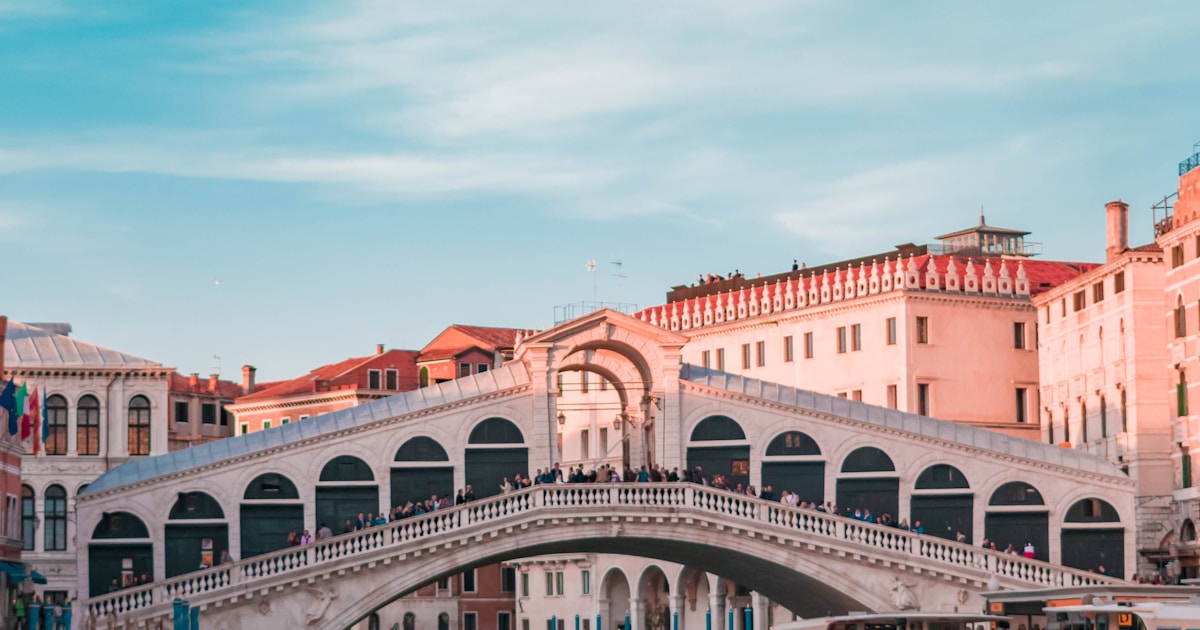
Venice is a miracle—a city that shouldn’t exist, perched on a lagoon with 100 islands connected by canals instead of streets. It’s also crowded, pricey, and melting into the Mediterranean. But despite these realities, Venice remains absolutely magical if you know how to navigate it smartly.
San Marco: Do It, But Do It Right
San Marco Square is the most famous piazza in Venice and the most crowded. The Basilica di San Marco is stunning with its Byzantine mosaics and stolen treasures. The Doge’s Palace is extraordinary Gothic architecture. But the crowds are apocalyptic, especially midday.
Go very early (8 AM) or wait until late afternoon (5 PM onward) when tour groups have departed. The basilica and palace are both worth seeing, but book tickets in advance and expect queues even at odd hours. The view of the lagoon from the Campanile (bell tower) is beautiful, but take the elevator up—the steps are brutal.
Skip the cafes in San Marco—a cappuccino costs €12-15. It’s infuriating. Walk five minutes away and pay €2.
Neighborhoods Where Venetians Actually Exist
Dorsoduro is where you feel Venice as a real place. It’s less touristy than San Marco but still central. The Accademia Museum has Venetian paintings, and the neighborhood has wonderful restaurants, galleries, and genuine life. Wander the streets and you’ll stumble upon small piazzas with locals sitting on benches, market stalls with fresh produce, and tiny bacari (wine bars).
Cannaregio is the residential heart of Venice—locals live here, shops serve locals, and the streets feel authentically Venetian. The Jewish Ghetto is in Cannaregio (the first Jewish ghetto in Europe, created in 1516) and is a moving historical area. The Rialto market spills over from the Rialto Bridge into this neighborhood.
Castello is the easternmost district and feels almost like a different city—quieter, less touristy, with a shipyard museum and naval history. The waterfront here is peaceful, and the local restaurants are excellent.
San Polo is home to the Rialto Bridge and market, which are incredible but swarmed with tourists. Once you pass the immediate Rialto area, the neighborhood opens up into genuine Venetian streets with local bars and simple restaurants.
The Bacari Experience: Cicchetti & Local Wine
Bacari are traditional Venetian wine bars—informal, standing-room-only, with tiny snacks. This is how Venetians actually eat. Walk into a bacaro, order a glass of wine (€2-3), and grab a few cicchetti (small plates of food).
- Cicchetti include polpo (octopus), sarde in saor (sardines with sweet onions), baccalà (salt cod), mozzarella, cured meats, and various prepared vegetables
- Each piece costs €1-3, so €10 gets you lunch plus wine
- Al Mercà near the Rialto Bridge is a legendary bacaro—arrive late afternoon to avoid tourists
- Get a spritz (Prosecco, Aperol, and soda)—it’s the Venetian aperitif and costs €3-4
Island Hopping: Murano, Burano & Beyond
Murano is famous for glass-blowing. The vaporetto ride (Line 3, €5-8) takes 15 minutes. You’ll see glass-blowing demonstrations and shops selling everything from functional glassware to absurd chandeliers. The demonstrations are free to watch, and no one will guilt you into buying. The glass is beautiful but touristy and overpriced.
Burano is a postcard come alive—pastel-painted houses, lace-making tradition, and fish restaurants along the canal. It’s touristy but genuinely charming. Arrive early (8 AM) to beat crowds or come in late afternoon. Try the local specialty, bussolai (ring-shaped butter cookies).
Torcello is the quiet island—a basilica, a canal, fields, and almost no people. It feels like stepping back in time. The cathedral has stunning Byzantine mosaics. It’s peaceful and melancholic in the best way. Take Line 9 from Murano (20 minutes, €5-8).
The Lido is the beach island across the lagoon—sand, sun, and access to the Adriatic Sea. Venetians actually go here to swim and relax. Grab a spot at a beach club for €15-25 to use loungers, or just walk the beach for free. Arrive early in summer when peak-season crowds overwhelm the sand.
Getting Around: Vaporetto Tips
Vaporettos (water buses) are how you move around Venice. Single tickets cost €10 per ride (expensive!), so buy a pass: a 3-day vaporetto pass is €30-40. The vaporetto network is confusing at first, but an app like Citymapper makes navigation easy.
Skip the tourist gondola rides (€100+ for 30 minutes and highly touristy). If you really want the experience, catch a traghetto (local gondola ferry) that crosses the canal at a few points for €2. It’s authentic and cheap.
Walking is actually how you navigate Venice. Get a map, accept that you’ll get lost, and enjoy it. Some of the best moments happen when you wander into a tiny campo (square) with zero tourists.
Dealing with Acqua Alta (High Water)
Venice floods regularly—acqua alta is high water, and it happens most in November through February. The city is resilient and life continues (mostly), but it’s undeniably uncomfortable sloshing through water in your shoes. If visiting in winter, pack waterproof boots or be prepared to wade. The flooding is getting worse, which is a longer conversation about climate change and modern Venice.
Food: Fresh Seafood & Venetian Classics
Venice’s food is seafood-focused. The lagoon and Adriatic provide fresh fish daily.
- Spaghetti alle vongole veraci (spaghetti with local clams) is the quintessential dish
- Try risotto di seppia (cuttlefish risotto) or brodetto (fish soup)
- Fegato alla veneziana (liver with sweet onions) is surprisingly delicious—don’t skip it even if liver sounds odd
- Eat fresh mozzarella with tomatoes and basil, available at street stalls
- Grab panini (sandwiches) from delis for cheap, excellent lunch
- Skip restaurants right by tourist attractions; walk 10 minutes for better quality and lower prices
When to Visit Venice
April-May and September-October are ideal—pleasant weather and fewer crowds than peak summer. July-August is absolutely packed and sweltering. Winter (November-February) brings acqua alta, cold, and gray skies, but few tourists and magical empty streets. Late February during Carnival is magical and expensive—book well in advance.
Budget Tips
- Buy an iCard vaporetto pass instead of single tickets
- Eat at bacari instead of formal restaurants for cheap, authentic meals
- Stay in Cannaregio or Castello instead of San Marco for lower hotel prices
- Picnic with supplies from local markets—fresh bread, cheese, wine, fruit
- Many churches are free to enter; some require donations (€1-2)
- Museums and attractions close Mondays; plan accordingly
Practical Venice Details
- Venice is cash-friendly but most places accept cards
- Waterproof bag or backpack is essential to protect belongings when walking
- Comfortable walking shoes are critical—you’ll walk 20+ km daily
- The city is incredibly small; you can be completely lost and still very close to where you want to be
- Bring minimal luggage—dragging suitcases through Venice is a nightmare (many places offer luggage storage)
- Learn a few Italian words; it’s appreciated and makes asking for directions easier
Plan Your Venice Trip with Aitinery
Whether you have 2 days or 2 weeks, Aitinery creates a personalized Venice itinerary in seconds—with real transport times, local restaurant picks, and insider tips you won’t find in guidebooks.
👉 Start planning your Venice trip for free at aitinery.com.